
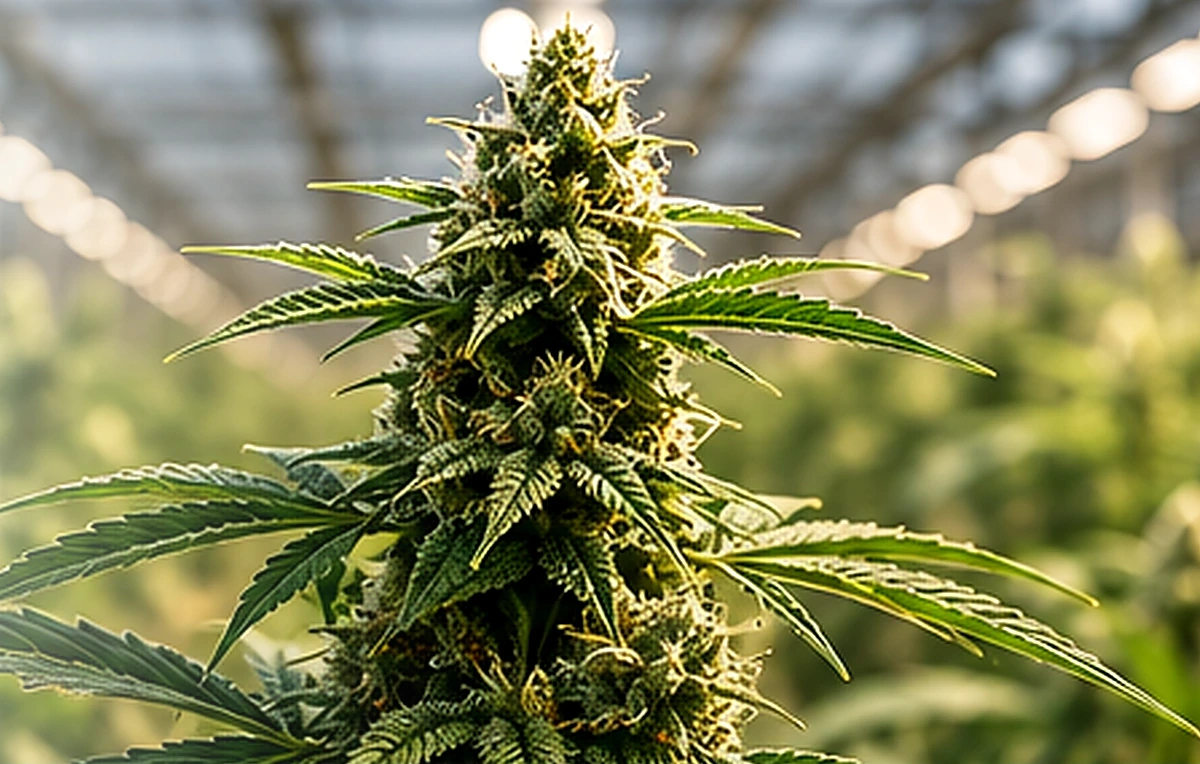
The discussion about industrial hemp in Germany attracted renewed attention in October 2026. For farmers, manufacturers and businesses in CBD wholesale one question is central: will commercial handling of low-THC hemp become more legally certain? The so-called misuse clause is at the centre of this debate.
On 14 October 2026, the German Bundestag's Committee on Agriculture, Food and Homeland held a public hearing on a bill introduced by the Alliance 90/The Greens parliamentary group. It proposes removing the misuse clause, expanding indoor cultivation options and raising the national THC threshold in the industrial hemp definition from 0.3% to 1.0%. This is a legislative proposal, not a new rule already in force.
1. What is the current political situation?
Bundestag document 21/2116 was introduced on 7 October 2025 and first debated on 19 March 2026. The public expert hearing took place on 14 October 2026. According to the procedural status researched up to 28 October 2026, the proposed industrial hemp liberalisation has not been passed. A firm commencement date therefore cannot responsibly be stated.
Two initiatives must be distinguished: an earlier 2024 proposal from the then federal government was not completed in the previous parliamentary term. The October 2026 hearing concerns the new Green parliamentary group draft. An earlier cabinet decision does not mean the current proposals apply.
07.10.2025: Introduction of draft 21/2116 · 19.03.2026: first debate · 14.10.2026: public hearing · 28.10.2026: the legislative process remains incomplete. The Bundestag procedure record shows its status.
2. What does the misuse clause mean?
The misuse clause forms part of the statutory definition of industrial hemp in the Consumer Cannabis Act (KCanG). In simple terms, low THC content is not the only criterion: under the relevant provision, dealings other than cultivation must serve a commercial or scientific purpose that excludes misuse for intoxication. Other statutory conditions also apply.
This additional requirement has caused uncertainty for years. Businesses must consider not only measurable product characteristics but whether misuse for intoxication can be excluded. Application depends on the specific facts and case law. A laboratory report showing less than 0.3% THC is therefore not automatically a general authorisation to sell CBD flowers.
3. Which three changes are being discussed?
| Topic | Draft proposal | Potential significance |
|---|---|---|
| misuse clause | Removal of the additional misuse requirement | Less uncertainty when classifying industrial hemp |
| THC threshold | Increase to 1.0% in the national industrial hemp definition | More scope for cultivation and strains, but no blanket product clearance |
| Indoor cultivation | Opening the rules to these cultivation methods | New opportunities for specialist agricultural businesses |
These three points are politically linked but legally distinct. The EU agricultural support threshold for industrial hemp remains 0.3%. Changing the national definition would not automatically change EU agricultural support or all food, cosmetics and other product requirements.
4. What opportunities could arise for CBD wholesale?
Greater planning certainty: Removing the misuse clause could eliminate a difficult-to-predict individual assessment. This could help suppliers and buyers, particularly with multi-year supply agreements, provided other legal conditions remain satisfied.
More domestic production: Opening up indoor cultivation could enable additional production models for specialist businesses. For certain raw materials, this might encourage shorter transport routes and more direct producer–buyer dialogue. It does not establish which models would be commercially viable.
More variety in strains and production: According to several experts, a higher national THC threshold could reduce weather-related cultivation risks. Buyers would still need specifications and batch analyses to match each individual delivery.
5. Which risks and questions remain?
Greater flexibility does not automatically reduce requirements in every area. Several reservations were documented at the Bundestag hearing:
- Food and feed safety: Experts from the Federal Institute for Risk Assessment (BfR) warned about potential THC exposure, particularly in food and feed. They called for clear product-specific safeguards.
- EU law and different thresholds: A national 1% threshold would not mean EU-wide harmonisation; support rules and other EU legislation would need separate consideration.
- Distribution misunderstandings: Changing the industrial hemp definition would not automatically legalise all CBD products or remove advertising, labelling, consumer protection or novel food requirements.
- Commercial uncertainty: Until legislation is passed and promulgated, business plans assuming liberalisation may face significant change risk.
At the hearing, representatives from agriculture and research welcomed potential easing of rules, while BfR experts expressed particular concerns about food and feed. These perspectives show why cultivation, trade and consumer protection must be considered separately.
6. What should CBD retailers and buyers do now?
- Plan under current law: Do not assume existing requirements have disappeared because of headlines.
- Review your range by product category: Different rules may apply to flowers, extracts, cosmetics, foods and seeds.
- Keep clear batch records: Document THC and CBD levels, sample identification, origin, product descriptions and responsibilities traceably.
- Keep supply agreements flexible: Do not base terms solely on an unresolved legislative change.
- Follow the procedure: Check developments against Bundestag records and promulgated legislation, not just industry reports.
Our checklist for credible B2B suppliers can also help with supplier selection. Eligibility for sale must still be assessed independently.
7. Conclusion: political movement, but no new law yet
The misuse clause debate concerns a central obstacle for the industrial hemp sector. Removal could bring businesses greater clarity; expanded indoor cultivation and a higher THC threshold could open additional production options. Health protection, distinctions between product types and EU law remain decisive.
As of 28 October 2026: The proposals are under parliamentary consideration. Existing provisions remain authoritative until legislation actually changes.
Frequently asked questions
Has the misuse clause already been abolished in 2026?
No. As of 28 October 2026, its removal is being debated in the Bundestag; the draft discussed here has not entered into force.
Can CBD flowers below 0.3% THC automatically be sold?
No. THC content is only one factor. The specific industrial hemp definition, intended use and other applicable rules matter.
Will the THC limit rise from 0.3% to 1%?
That is part of draft 21/2116, but has not yet been enacted. The national definition and EU agricultural support conditions must also be distinguished.
What would opening up indoor cultivation change?
The draft aims to create additional cultivation options for relevant businesses. Specific duties and permissions would follow only from enacted legislation.
Sources and further information
German Bundestag – legislative procedure 21/2116 ↗
Consumer Cannabis Act – current wording ↗
German Bundestag – earlier proposal did not enter into force ↗
Editorial information, updated 28 October 2026. Not legal advice or a statement on the eligibility for sale of individual products. Current legislation and product-specific requirements must be checked before business decisions.
Read more: How to assess CBD flowers and laboratory reports or choosing reliable B2B suppliers.
Informed guidance for CBD wholesale.
The insights section of cbdgrosshandel.de provides practical guidance, market information and further resources for trade buyers.
View all articles ↗