
1. Why packaging in CBD wholesale is more than a wrapper
When developing a CBD brand, retailers often think first about strains, flower quality and a logo. In everyday business, packaging also shapes how customers receive the product: it creates the first impression, must suit the goods and should support handling from filling and transport to storage. CBD packaging is therefore a product, branding and sourcing issue at the same time.
The difference is clear: a wholesaler receiving loose goods in large containers needs different processes from a retailer displaying ready-to-sell 1 g portions. Other businesses already have their own flowers and only need a provider for contract filling and sealing. A good packaging project therefore starts with a clear question rather than a fixed pouch size: What role must the packaging fulfil in this particular business model?
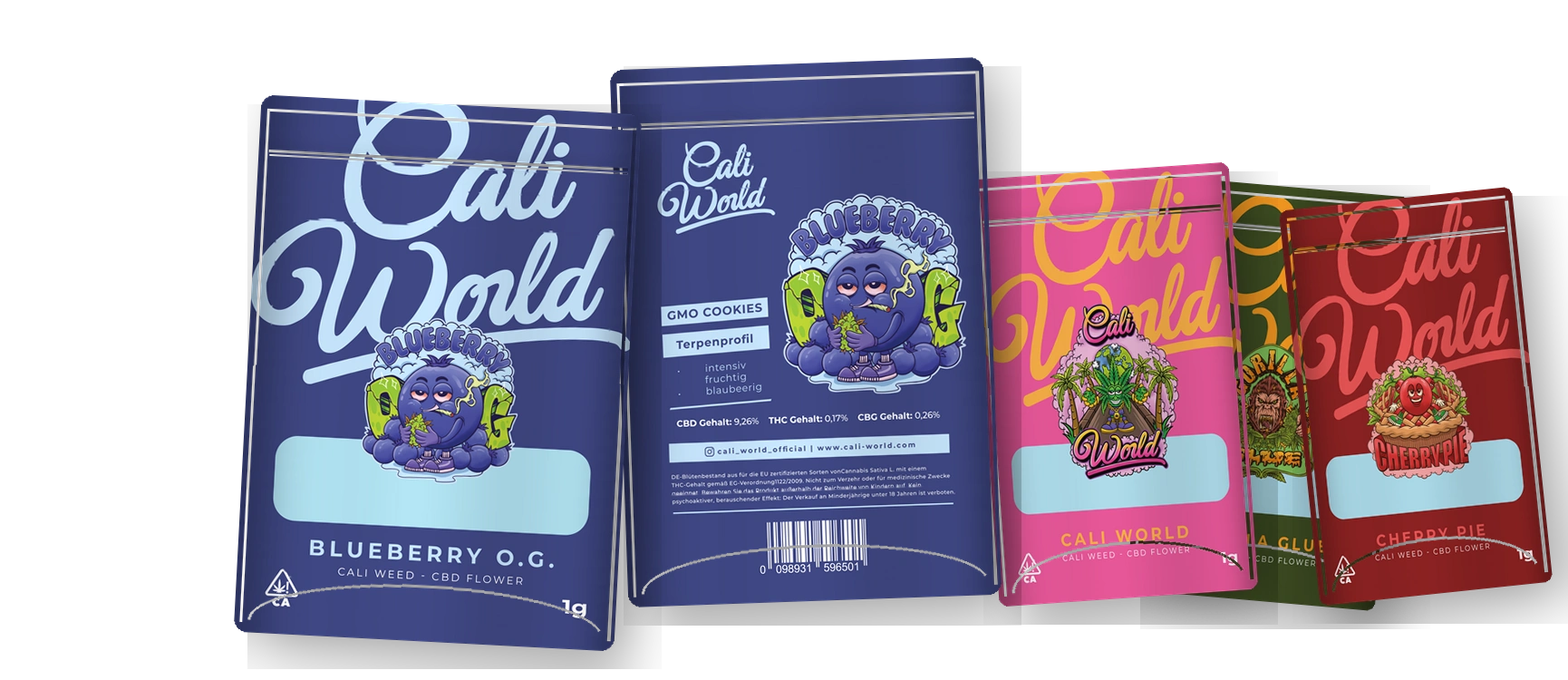
The different Cali World designs provide practical illustrations. The pouches show different colours and brand styles; they are design examples, not statements about current strain availability or the suitability of a packaging structure for every product.
2. The brief: six decisions before the first design
Intended use and product type. Will the packaging hold loose CBD flowers, pre-portioned goods or another product? What are the goods' characteristics and storage conditions? Packaging for CBD flowers is not automatically suitable for foods, cosmetics or other categories.
Sales channel and target audience. A small specialist retailer, an online shop and a reseller with many outlets have different requirements for presentation, shipping and labelling space. Additional protective packaging may be needed for shipping.
Fill weight and volume. Weight in grams is only a starting point. Flower volume also depends on structure, sorting and compression. A 1 g pack should ideally be filled and assessed with real samples.
Number of designs. One layout with variable labels differs in production from five completely different print designs. The number of variants, printing method and combined order quantity affect technical planning.
Desired specification. Resealability, seals, stand-up bases, surface feel, windows, additional safety features or other closures should be settled before approval. Not every combination suits every film structure.
Responsibilities. Who supplies the flowers? Who organises filling? Who checks mandatory information and takes responsibility for placing the product on the market? These questions belong in the first discussion, not at the final artwork stage.
3. PE, VMPET, PET and soft-touch: what the layers do
An example from the existing Cali World artwork is a multilayer laminate made of PE – VMPET – PET – soft-touch film, described from inside to outside. This is not a blanket recommendation for every filling product. Film structure, layer thicknesses, adhesives, sealing parameters and other properties must be technically confirmed for the intended use.
PE (polyethylene) – inside. The product-facing layer can serve as a sealing layer in suitably designed laminates. Appropriate sealing temperatures, seam widths and mechanical strength depend on the specific film and machine. “PE” alone is not a complete specification.
VMPET – metallised PET film. A thin metallised film can contribute to barrier properties in a suitable laminate, for example against light or gas and water-vapour transfer. Actual protection depends on the structure, metallisation quality, processing and possible microscopic damage. “Metallised” does not automatically mean completely impermeable.
PET (polyethylene terephthalate). A PET layer can contribute to a laminate's dimensional stability and printability. Its role must be considered alongside the other layers; PET alone does not replace testing the finished packaging.
Soft-touch film – outside. The visible surface primarily affects feel and appearance. A matte, soft finish can support premium branding. It should also be assessed for abrasion, scratching and processability. A pleasant feel is not evidence of product protection.
Which properties should the supplier document?
Instead of comparing material names alone, B2B buyers should request specific specifications for the finished packaging . Depending on the product, information on thickness, barriers, sealability, print durability and test methods may be useful. Oxygen or water-vapour transmission figures are meaningful only when test conditions and units are clear. Suitability depends on the actual requirements of the contents.
4. Which packaging formats make sense?
Stand-up pouches, flat sealed pouches and other flexible formats differ in stability, usable area, closure options and the work involved in filling and shipping. Choose the format based on the filling process and subsequent use .
Compact sizes such as 0.5 g or 1 g may be relevant for small retail units. Other possibilities include 3.5 g, 5 g or 10 g and custom formats. These are possible sizes, not a promise that every combination can be produced at any time. Product volume, available tooling, number of designs and quantities must also fit.
A fully filled and sealed sample is useful. Check whether filling is easy, whether product enters the sealing area and whether labelling remains legible. The dimensions of 85 × 120 mm shown on a Cali World artwork template apply to a specific design and must not be assumed suitable for every fill quantity.
5. Packaging design: from brand concept to print-ready artwork
A brand takes more than a logo. Successful brands are recognisable, understandable and appropriate for their audience. Design must attract attention from a distance and present factual information legibly up close.
Start with a short design brief: intended brand impression, colours, product names, logo files, references, packaging format and required product information. Review a draft using realistic front and back views before creating print-ready files with the correct dieline, bleed, colour specification and adequate mandatory text areas .
The Cali World variants show how colours can distinguish a product family. Blueberry O.G. in blue, Cherry Pie in red, Gorilla Glue in dark green and a pink Cali World design take different visual directions while sharing a consistent brand identity. The images are digital views of existing print designs.
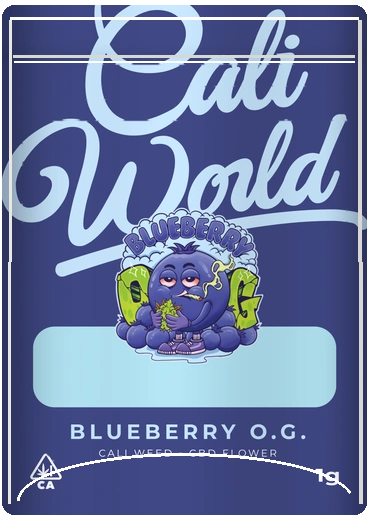
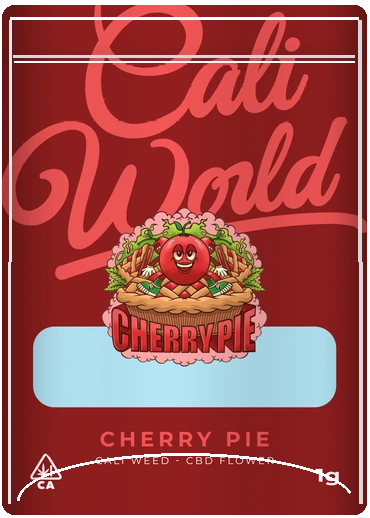
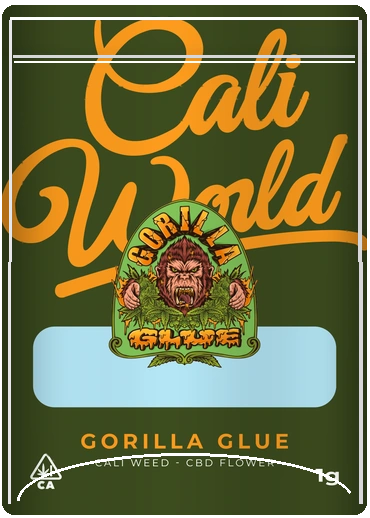
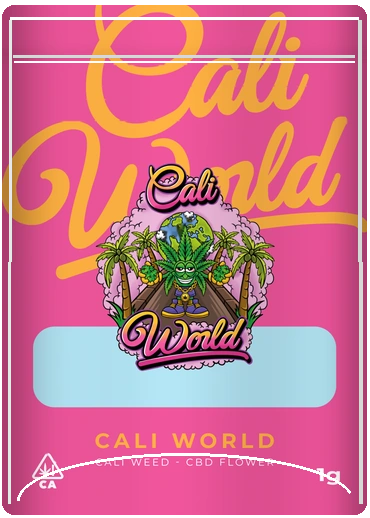
Practical note: Do not assess designs on screen alone. Colour reproduction, matte finishes, contrast and small text should ideally be checked on a real sample or suitable approval proof. The small rear panel is often the critical area for product information.
6. Three routes to finished packaging: with or without your own flowers
Model A – packaging and goods as one project. A business needs a complete B2B solution combining suitable goods, its own design and packaging. Products, batch documents, packaging and processes must be coordinated. The exact scope is agreed per project.
Model B – professional filling of customer-supplied flowers. Customers supply their own goods; a service provider handles portioning, filling and sealing as agreed. Incoming inspection, documented batch assignment, weight checks, hygiene and cleaning procedures, and clear rules for rejects and leftovers are particularly important. The lawfulness of the specific product and activities must be established beforehand.
Model C – printed packaging only. Businesses with their own filling equipment may need only empty, individually designed pouches. Format, film structure, artwork, feasible production quantities and delivery logistics are the priorities. Test sealing with the customer's machinery before larger orders.
Mixed approaches are also possible: for example, ordering samples and printed packaging first and outsourcing filling later. Our private-label page explains these project models in more detail.
7. Filling, sealing and quality control
Once the pouch is made, the next technically important stage is processing the actual contents. For flowers, volume, surface characteristics and product residues in the sealing area matter. An attractive print is of little use if a seam is unreliable or filling damages the product.
A professional filling plan should record which batch is used, who checks weights, agreed tolerances, how seal quality is monitored and how faulty units are removed. Multiple strains or customer projects also require clear separation, cleaning and identification of work in progress.
A small initial run often helps test the real process: does the format fit the goods? Is sealing repeatable? Does the design withstand normal handling? This reveals much more than a 3D visualisation alone.
8. Plan quantities and production times realistically
Blanket minimum quantities are rarely helpful. Appropriate quantities depend on printing method, number of layouts, film combination, available formats and filling requirements. Five designs may have different economics from one pouch with varying labels. Quantities are therefore agreed per project.
With a well-prepared brief, a packaging design may be created within a few days . This is a possible turnaround, not a guarantee for approval of all text, rights and artwork. Production including shipping may take around three to six weeks under suitable conditions. Special materials, many layouts, sample approvals or external tests may extend this.
The following sequence helps with scheduling:
- Clearly describe the product and required services.
- Set the packaging format, material and number of designs.
- Check layouts, artwork and legally required information.
- Approve samples or production.
- Produce pouches, then fill and seal if required.
- Check quality, ship and inspect incoming goods.
Practical tip: Plan backwards from a realistic arrival date to your intended sales launch. Include coordination, sample shipping and potential revisions, not just production time.
9. Calculate properly: compare more than pouch prices
For a private-label brand, profitability depends not on the cheapest empty pack but on the total cost per saleable unit. A simple approach is:
Unit cost = product + packaging + allocated design/print setup + filling + quality checks + logistics + rejects/contingency.
Depending on the business model, other costs include storage, returns, financing and distribution. Pricing should also account for the desired trade margin, VAT and other taxes, and a realistic selling price.
A common mistake is mixing one-off design costs with ongoing unit costs. Separate one-off project costs, variable costs per unit and recurring operating costs. This helps compare a trial run with later repeat orders without prematurely buying quantities for which no sales plan exists.
A lower unit price at a high order volume is not automatically better. If capital remains tied up in stock, designs change frequently or demand is still being tested, a smaller, more predictable run may fit better.
10. Quality, labelling and legal responsibility
Packaging and products must be assessed separately. Suitable materials and correctly printed labels do not automatically make CBD goods eligible for sale. Different product-specific rules may apply according to intended use. The participating businesses must also clarify responsibility for labelling, product information, traceability and any required documentation.
Packaging is also subject to packaging legislation . EU Packaging Regulation (EU) 2025/40, often called the PPWR , has generally applied across the EU since 12 August 2026. It phases in further requirements. Avoid outdated blanket assumptions when using or supplying packaged goods. Germany's Central Agency Packaging Register explains registration in LUCID and possible system participation and reporting duties; a company's role and obligations depend on its position in the supply chain.
Projects therefore need clearly defined responsibilities: who is legally classified as the packaging manufacturer or producer? Who supplies the filled product? Who checks packaging and product labelling? Who holds valid trademark and design rights? A packaging provider can handle technical steps without automatically assuming all the customer's statutory responsibilities.
This guide provides orientation, not legal advice. Before selling, obtain a current, qualified assessment of the specific product, intended use and packaging requirements.
11. Assess sustainability and recyclability realistically
Less packaging material may sound attractive, but it is not the only aim. Packaging must protect the product in its intended use and meet legal and environmental requirements. Thinner film can offer benefits if it still performs reliably. Conversely, complex multilayer laminates are not automatically needed for every application.
For laminates containing different materials, end-of-life recovery requires particular attention. A VMPET layer or the word “recyclable” alone is not evidence of recyclability. The complete structure, local collection and sorting systems, technical standards and evolving rules all matter. Ask suppliers for substantiated details rather than unexplained sustainability badges.
12. Common mistakes in CBD packaging projects
- Designing before choosing the format: Finished artwork does not fit the actual dieline properly.
- Equating weight with pouch volume: The contents sit too close to the seal or leave excessive empty space.
- Inferring layer properties from product names alone: Barrier and sealing performance are unspecified.
- Checking mandatory text too late: Layouts need changing again immediately before printing.
- Too many designs without volume planning: Variants increase coordination and production work.
- Not carrying out a real sealing trial: A film looks good but does not suit existing machine parameters.
- Considering only the lowest unit price: Storage, capital and change risks are ignored.
- Leaving labelling responsibility unclear: The contract does not specify who performs which checks.
13. B2B checklist before an enquiry
This information helps with initial project assessment
- Product type, intended use and any existing batch documentation
- Desired fill quantity and preferably a real product sample
- Pouch shape, approximate dimensions and closure type
- Preferred materials, surface, barrier requirements and special features
- Number of packaging designs and available logos
- Planned initial quantity and expected repeat orders
- Service model: packaging only, filling customer-supplied flowers or a complete project
- Target date, delivery location and contacts for design and product approval
You do not need every answer in advance. An initial enquiry can be an idea and an approximate goal – we can develop the details together.
Enquire about packaging14. Frequently asked questions about CBD packaging
Can I order only empty printed CBD packaging?
Yes. Supplying individually designed packaging alone is one project model. Format, material, printing method, number of layouts and quantities are agreed for the project.
Can I have my own CBD flowers filled and sealed?
Professional filling of customer-supplied flowers can be part of the service, subject to prior assessment of the product, lawfulness, technical processes, quality and responsibilities.
What is the minimum quantity for private-label packaging?
A universal number would be misleading. Format, material, printing technology and number of different designs are especially relevant. The minimum is determined individually.
How quickly can a packaging design be ready?
With a clear brief, an initial design may be possible within a few days. Print-ready files and final approvals also depend on revision rounds and complete information.
How long do production and shipping take?
Around three to six weeks may be possible under suitable conditions. Lead times, special materials, design count and required checks can change the actual timeframe.
Is a PE/VMPET/PET laminate automatically airtight and lightproof?
No. The structure describes materials, not proven performance of the finished packaging. Barrier properties and tightness must be assessed using suitable specifications and, where necessary, testing.
Can I combine different packaging sizes?
This may be possible if materials, tooling, print processes and quantities fit. Small portions and larger trade formats are agreed per project.
What information belongs on the packaging?
That depends on the product's legal classification and intended distribution. Product law, labelling, packaging legislation and any further requirements must be checked before print approval.
Can I use existing layouts or artwork?
Yes. Existing designs are a useful starting point. Image resolution, dielines, colour definitions, legibility and usage rights must be checked before production.
Why do I need a sample pouch?
A sample helps assess fill volume, seals, handling, legibility and design realistically. Practical trials can prevent later problems, especially with new products or machinery.
15. Conclusion: the best packaging is the right fit
High-quality CBD packaging need not be the most complex, expensive or conspicuous option. It should suit the product, brand, actual filling process and business economics. A structured brief, useful samples, traceable technical data and clear responsibilities matter more than general “premium quality” claims.
If you want to build your own CBD brand, our page on CBD private label and white label provides more information on branding, project stages and service models. More images and possible pouch formats are shown in our custom CBD packaging overview. For raw material sourcing, our article on checking laboratory reports and batch records provides further preparation.
Sources and further information
- European Commission – new packaging rules from August 2026
- EUR-Lex – Regulation (EU) 2025/40 on packaging and packaging waste
- Central Agency Packaging Register – LUCID registration
- Central Agency Packaging Register – system participation and data reporting
- European Commission – PPWR guidelines (June 2026)
Editorial article, updated 29 October 2026. Examples describe design and project options; specific material properties, legal suitability, quantities and production times require individual assessment. Not legal advice.
Which packaging fits your project?
Whether you need empty packaging, professional filling of your own flowers or a complete private-label solution, we work around your project rather than a standard package.